! BOOKS !

Dear Gift Reader,

Hello, may you be healthy and in pursuit of what makes you happy.

I am happy to welcome you to this conversation about reading and making books. Today is a Big Day in my writing and publishing life. Today, December 2, 2025, is the official publication day for The Long Now Conditions Permit!

In this ! Books ! dispatch, I share with you the story of how my second full-length collection has come into being—from writing individual poems to their publication in literary magazines to the selection of the manuscript, The Long Now Conditions Permit, as winner of the 2023 Test Site Poetry Series Prize to finding the perfect cover image.

AnnouncingThe Long Now Conditions Permit!

THE LONG NOW CONDITIONS PERMIT
by Jami Macarty
University of Nevada Press, December 2025

The Long Now Conditions Permit confronts the persistent brutalities of our world through poetry that both names and resists the injustices shaping it. From the quiet sorrows of everyday slight to the overwhelming crises of ecological collapse and gendered violence, these poems document what is occurring—the horrendous and the intimate, the anguished and the magnificent.

With ethical attention, Jami Macarty’s collection engages the political, ecological, and personal forces that shape and mark our lives, offering an ecofeminist ethic of care as an antidote to extractive capitalism and patriarchal norms. Each poem meditates on power, insists on articulating what is being lost—and what must be saved and reclaimed. 

Amid the exploitation and violence, these poems find moments of grace: the scent of a sea rose, a desert walk in spring, the company of birds, Earth entire. The Long Now Conditions Permit is both tender elegy and urgent call, exhorting readers to grapple with the devastating failings of humanity and the saving possibilities of love. 

Winning the 2023 Test Site Poetry Series Prize

On March 4, 2024 my second manuscript of poetry marched forth to its life as a book when I answered a call from Claudia Keelan, editor, who told me The Long Now Conditions Permit won the 2023 Test Site Poetry Series Prize!
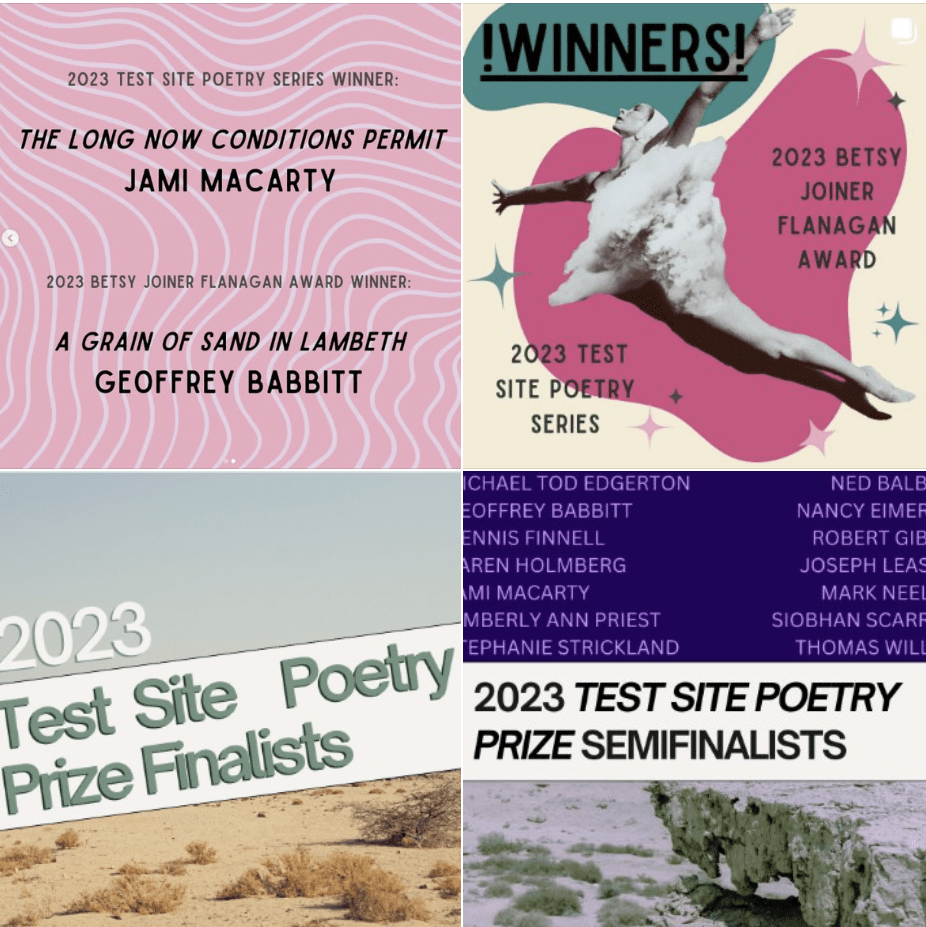
The 2023 Test Site Poetry Prize Semifinalists, Finalists, and Winners!

The Test Site Poetry Series is the collaborative book-publishing project of Interim: A Journal of Poetry and Poetics and the University of Nevada Press. Interim, established in 1944 by the late Wilber Stevens, is housed in the English Department at the University of Nevada, Las Vegas and is one of the longest-running “little” literary magazines in the United States. Interim editors and poets Claudia Keelan and Andrew S. Nicholson serve as Test Site Poetry Series editors. The Test Site Poetry Prize-winning book is chosen by Claudia Keelan and an advisory board, which includes poets Sherwin Bitsui, Donald Revell, Sasha Steensen, and Ronaldo V. Wilson.

The editors and advisory board are looking for manuscripts that engage the perilous conditions of life in the 21st century, as they pertain to issues of social justice and the earth. The winning book will demonstrate an ethos that considers the human condition in inclusive love and sympathy, while offering the same in consideration of the earth. Because we believe the truth is always experimental, we’ll especially appreciate books with innovative approaches.

Now, some of the delicious words The Test Site Poetry Series editorial board members shared about The Long Now Conditions Permit!

from Sasha Steensen (on Facebook):

from Ronaldo V. Wilson (the book’s endorsement):

from Claudia Keelan (the book’s endorsement):

from Donald Revell (the book’s endorsement):

These poets’ words for The Long Now Conditions Permit, heart-expanding gifts!

Finding the Cover Photo

The first time I saw Masahiko Kuroki‘s photograph of the tree (above) was early December 2024, scrolling my Facebook feed. It was late at night after a long day’s driving in a highway-side hotel. I had been stressing over the just-right photo. The publisher didn’t care for my ideas, and I wasn’t wild about theirs. Such is the often fraught book cover conversation!

It’s a mystery as to why Masahiko Kuroki’s photo appeared in my feed. I wasn’t following him. I had never heard of him. Nor had I previously seen any of his photos. Yet somehow rather miraculously his photo appeared. When I saw it, I slid off the edge of the bed. Then recovering myself from the floor, I shined the image toward my partner’s face and asked, What about this for the cover? As if falling off the bed wasn’t enough!

When I shared Mashiko Kuroki’s photograph with the University of Nevada Press team, they said: “But we’re really loving the final image… It’s the most unique of all the images you’ve suggested, or that we’ve found, and I love that the tree can be interpreted literally as a tree, or with just a bit of imagination, as a woman with her arms outstretched.”

As we moved through the design process, their admiration for Kuroki’s photograph grew: “Again, our team just loves this image! It’s so evocative and interesting. I think it’s really going to pull readers in.”

And, as we arrived at the cover’s final design: “For what we’ve started calling the “tree woman” image here in the office, I still think this is the best option, by far. If you want something unique that you’re not going to find on another book cover, this is the image to choose. We were talking about it in our staff meeting this morning, and everyone agrees this is one of the most striking covers we’ve proposed in quite a long time.”

I experience Masahiko Kuroki’s photo viscerally every time I behold it. I feel an upward reaching within me. Masahiko Kuroki’s photo is perfect company for the poems in The Long Now Conditions Permit which feature the figures of trees and women and seek a freedom from the threat of violence that all too often pervades natural and domestic environments.

Thank you to, Masahiko Kuroki, for agreeing to accompanying my poems with his photograph!

Writing the Poems in The Long Now Conditions Permit

I freshly wrote or deeply revised all of the poems in The Long Now Conditions Permit over ninety-five days between January 2020 and January 2021. The poems were drafted/revised among a shifting cohort of other poets during five days in person at a goddess table in January 2020 as the COVID-19 pandemic was just coming to our attention. Then, over three thirty-day online poem-a-day writing sprees in July 2020, October 2020, and January 2021. I loved the practice of trying to write a poem-a-day. The intensity! There were duds, but there were keepers. The process gave me an experience of seeing just what writing I could accomplish in a relatively short period of time. It showed me the momentum of daily practice and power of cumulative effect in writing. The practice offered me a community of writers. And I made some poetry pals!

Generous Publishers of Individual Poems

What makes a full-length collection? Individual poems! They are the building blocks and act as gateways from poem to poem, and engender conversations between poet and editor, poet and publisher. Individual poems have their own lives and are part of the lives of full-length collections. Individual poems are the beginning of a book, and they point to a book when it comes into being.

While searching for my book’s publisher, I tweaked the poems and tried out the revised versions by sending them out for consideration with literary magazines in Canada and the US. This editorial process offered me valuable information about which poems would make up the manuscript of The Long Now Conditions Permit. Sometimes the poems editors believed in were also the poems I believed in. Sometimes not. So, I had to figure out which poems mattered most to the life of the book.

Thirteen editors of literary magazines selected individual poems from The Long Now Conditions Permit for publication in their the literary magazines they helm. I wish to acknowledge the hardworking and devoted editors, staff, publishers, and printers for giving time, attention, and space to my writing. Thank you, Geoffrey Gatza at BlazeVOX; Matthew Cooperman at Colorado Review; Haley Lasché at Concision Poetry Journal; Claudia Keelan at Interim: A Journal of Poetry & Poetics; Simone Muench at The Jet Fuel Review; Robert Julius and Alyssa Froehling at The Journal; Charles Kell at Ocean State Review; Richard Greenfield at Puerto del Sol; Jackie Janusis at Redivider; Jaimie Gusman at Tinfish; Eleni Zisimatos at Vallum Magazine and Vallum Chapbook Series; Gillian Conoley at Volt; Sue Goyette, editor of the anthology Resistance: Righteous Rage in the Age of #Metoo (University of Regina Press, 2020). Special thanks to Interim: A Journal of Poetry and Poetics, Vallum Magazine, and Vallum Chapbook Series for their ongoing support of my writing by publishing my poems in several issues between 2020 and 2024.

I take the time and space above to name these editors and publications as a gesture of gratitude because they took the time with and offered space to my writing. They are important to my writing life. And they are part of the valuable conversation I want to have about my poems and poetry in general.

Seeking a Publisher

In December 2021, I offered for consideration to The Test Site Poetry Series the first version of the manuscript. It was one hundred and twenty pages long! That’s long by most standards. Typically, the recommended length for manuscripts is around seventy pages. The manuscript’s title was, and has always been, The Long Now Conditions Permit. It was named a finalist for The Test Site Poetry Series. Spur! The next year and the one after that, the manuscript was on the shortlist with Canada’s Brick Books. Spur! Spur! Then, in March 2024 it won the 2023 Test Site Poetry Series Prize! In all, I offered the manuscript for consideration forty-one times.

For me, the story of how The Long Now Conditions Permit came into being sums to two words: Persistence! Perseverance!

Now, Seeking Readers

Now, for my book I seek readers! Gentle, generous readers who will give The Long Now Conditions Permit the gift of their attention. I would love to count you as one of my poetry collection’s readers! Will you be one of The Long Now Conditions Permit‘s readers?

: : : :
Thank You Bows!

+ Thank you bows (continuous!) to you, dear reader, for the gift of your attention! Welcome, welcome to those of you new to these dispatches on reading and writing books. May you find inspiration for your writer’s life here!

+ Thank you bows (continuous!) to my precious community. To everyone who support my writing, especially women/women-identified writers for not coveting or competing, but sharing and supporting.

+ Thank you bows for supporting The Long Now Conditions Permit (2025): +Bows (continuous!) to my publisher the University of Nevada Press and staff for making my book The Long Now Conditions Permit with me. +Bows (continuous!) to Claudia Keelan and Andrew Nicholson, series editors, and the series board Sherwin Bitsui, Donald Revell, Sasha Steensen, and Ronaldo Wilson of Interim’s Test Site Poetry Series, who selected The Long Now Conditions Permit (University of Nevada Press, December 2025) as the 2023 winner of the Test Site Series Prize. +Bows (continuous!) to Claudia Keelan, Donal Revell, and Ronaldo V. Wilson for offering your word-endorsements! +Bows to Mashiko Kuroki for his luminous tree-woman photo for the cover! +Bows (continuous) to the editors of literary magazines who supported the publication of individual poems from The Long Now Conditions Permit: Geoffrey Gatza at BlazeVOX; Matthew Cooperman at Colorado Review; Haley Lasché at Concision Poetry Journal; Claudia Keelan at Interim: A Journal of Poetry & Poetics; Simone Muench at The Jet Fuel Review; Robert Julius and Alyssa Froehling at The Journal; Charles Kell at Ocean State Review; Richard Greenfield at Puerto del Sol; Jackie Janusis at Redivider; Jaimie Gusman at Tinfish; Eleni Zisimatos at Vallum Magazine and Vallum Chapbook Series; Gillian Conoley at Volt; Sue Goyette, editor of the anthology Resistance: Righteous Rage in the Age of #Metoo (University of Regina Press, 2020).

++ THE MINUSES ++

Continuing, dear reader, with the pluses congregating around The Minuses. You may be wondering what are “the minuses” and how do the poems of the book address and express them… To satisfy your wondering, here’s an encapsulation of what the poems take on and talk up:

The Minuses beckons attention to ecological and feminist issues and the co-incidence of eating disorders, sexual harassment, family and intimate partner violence, homelessness, suicide, environmental destruction, and other forms of endangerment. Seeking escape from relationship, belief and self, multi-perspective survivors claim voice as contemplators of natural splendors, and as seekers of incarnate desires. These voices amplify the precariousness that predicates women’s lives and the natural world, laying bare the struggle and faith required to endure with integrity and spirit intact.

from the back cover of The Minuses

The duality between “the minuses” and “the pluses” is an aspect of the physical word being lived and survived within the poems of The Minuses.

That there are pluses occurring around the poems of The Minuses and in a continuum of readers and their responses given to the poems. Well, that’s everything to a poet. By which I mean: an expansiveness, transcending the physical world and belonging to the spiritual world.

: : : :

One such person giving his spirit and attention to The Minuses is Paul Nelson, founder of Seattle Poetics LAB (SPLAB), the Cascadia Poetry Festival, and POetry POstcard Fest (PoPo). As well as a spiritual practitioner and a maker of community-based projects, Paul is the author of Organic Poetry: North American Field Poetics, a collection of essays, and A Time Before Slaughter, a serial poem, re-enacting the history of Auburn, WA, among others. I hope you will give some of your special attention to Paul’s creative and community work.

Here, I give you an excerpt of Paul’s “Some Notes on The Minuses,” which he posted on his site on July 10, 2020. Click on Paul’s blog title or the date to read his notes in full; it’s worth the click (!) because of the context he offers on Postmodern poetics and Charles Olson’s “dodge of discourse.” Here’s the excerpt of Paul’s “Notes”:

Notes on The Minuses: Paul Nelson

To celebrate that 5% of North American poetry (a number I simply pulled out of some wet, warm place) one must savor the books that go beyond the dodges of discourse. One which came across my desk a couple of months ago is The Minuses by Jami Macarty…

As I was reading The Minuses I took some notes as if I were going to interview her. So, this is not a “review” which is not my forte, but some notes on The Minuses.

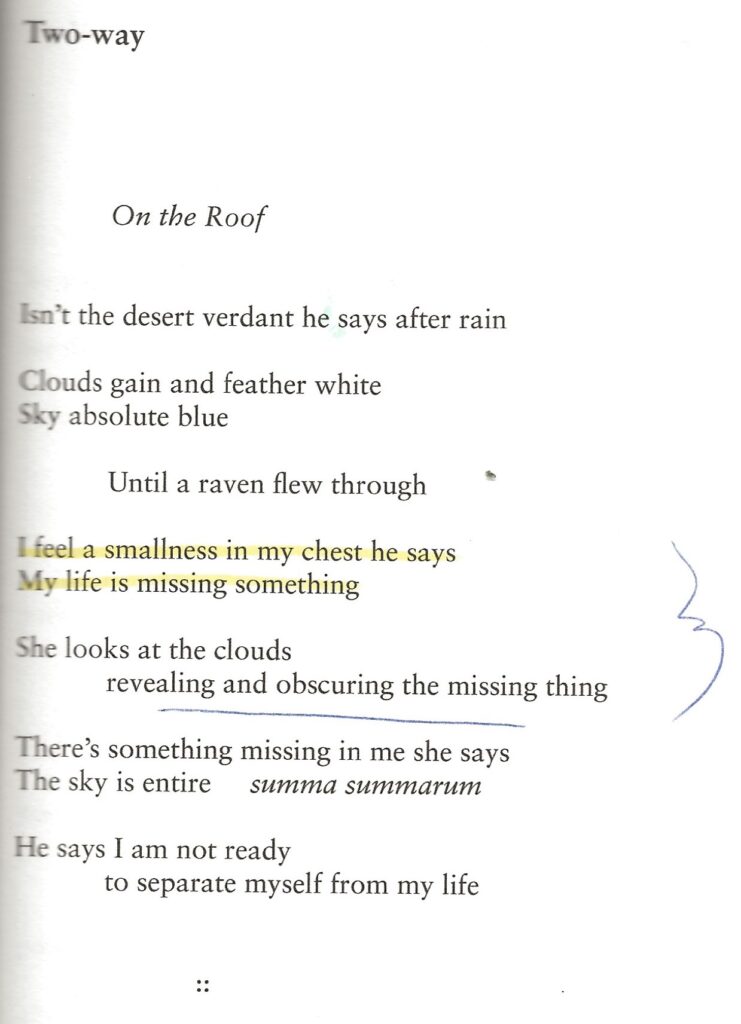
First note is from the poem Two-way:

Part (page 9) of the poem, “Two-way,” from The Minuses; image by Paul Nelson.

In many North American indigenous cultures Raven is associated with death, or transformation. A trickster like coyote in some traditions. In J.C. Cooper’s book An Illustrated Encyclopaedia of Traditional Symbols (a go-to book for me) Raven represents prophecy, is a symbol of “blackening and mortification” in alchemy and also “The raven sent out from the Ark by Noah represents wandering, unrest and the unclean.” Here’s where we remember the allusion to violence in the back blurb and recognize the divinity the author sees missing from the situation. I love how she ends the poem, referring to a helicopter taking off, leaving “the earth-abandoned swirl.”

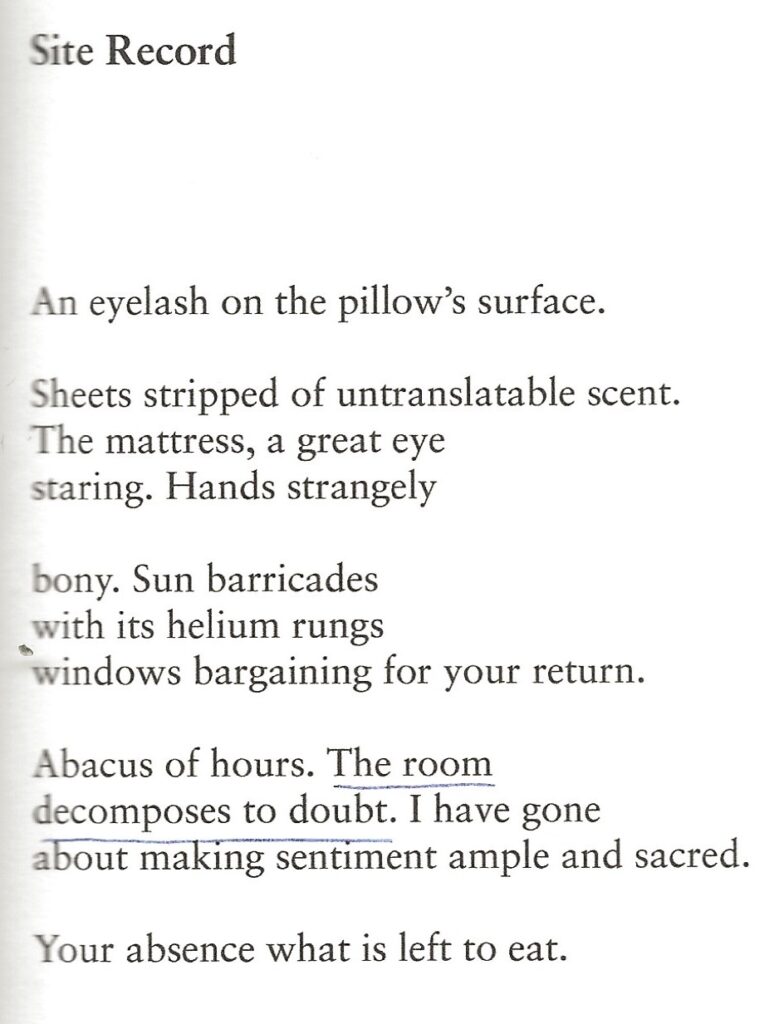
There is the poem Site Record:

The poem, “Site Record” (page 19) from The Minuses; image by Paul Nelson.

Take THAT you SOB!

And one could go on like this, pointing out the very sharp perceptions, the moments where one feels aligned with the poet, perhaps re-experiencing the worst moments of relationship (though as a straight man, I am much less likely to experience physical abuse or violence in a relationship) … In the notes at the end of the book, which are helpful and not “here’s what this poem means” which is what you might find in a book of naïve or “workshop” poetry, she writes that the poem is “indebted to Leslie Scalapino and Rosemarie Waldrop.” Here are two poets that are both well known in “outsider” North American poetry circles and gives you some sense of the poetry ancestors she has allied herself with...

: : : :

I feel very lucky to have Paul’s “Notes”; these are the sort of thoughts-in-action, reader’s response most precious to a poet. You are most cordially invited to go directly to Paul Nelson’s site and read the entirety of “Some Notes on The Minuses.”

: : : :

Also on July 10, as luck would have it, Talking Poetics #22: How Poems Begin, a piece I offered to ottawa poetry newsletter, curated by rob mclennan, was published.

How does a poet begin a poem? Does the poet begin a poem or does the poem begin itself? These questions are the basis of my inquiry on how “my” poems begin and from where, from what energy and impulse. Read what I wrote on the matter of beginnings:

Talking Poetics #22 : Jami Macarty

How poems begin

Nuts and bolts. Which comes first? The answer interests me. Sometimes bolts; almost always nuts! At other times, especially when writing is happening in real time, the question is forgotten…. When a poem is beginning or middling or ending then there’s no need for the question. Questions about how a poem begins seem especially instrumental as points of departure when no poem is forthcoming or beginning. If I can know how a poem begins, then maybe I can begin one. A poem, it seems to me, is always beginning.

From another angle, who knows how a poem gets started? When confronted with this question, I don’t. In so many ways and a lot of the time, the beginning arises out of mystery. Some immaculateness.

If a poem’s a living thing like a plant, then its beginning is a seed. Or, the beginning is a bird that eats and passes the seed on, somewhat fortified, to a locale where conditions are more favorable and growth more likely.

This process may suggest silence, but monitor for heartrate and you’ll hear one. Ah ha! That seems to be the way a poem gets started for me—auditorily. Via a seed sound, word, or phrase. I hear something whispered, overhear speech or a birdsong or a gate creak—flints that spark my mind or serve like a hand shot straight up inquiry.

As I think about these spokens and overheards some qualities emerge. They are typically the most obvious things said: Something is not right here. Often declarative. Ambiguous. A double entendre. Often paratactic: I’ll be mercy if you be a killer whale. Sometimes mishearings: Age of Aquariums. Alliterations. Assonances. Aphorisms given new life. Chiasmic reversals and antimetabolic turn abouts—Let me go, so I can come back, my mother said.  Repetitive echophenonomena like the Gila woodpecker beak-banging the corrugated roof. Syllogistic.

So, there’s a sound, a phrase, a statement, an utterance of varying qualities whose wind thrums my mind. I use a notebook. The words get written down. Often there is more listening and recording on the page. Collages of meaning and tone. If not then, later.

A parallel visual process may also unfold. Instead of hearing the phrase, it’s read or misread. It gets written down. That may lead to an on-the-spot erasure or mining of language, words, word pairings. More phrases written down.

Mood may dictate. Mood of listener, reader. Mood of what’s heard and read. Or, is that intuition talking. Both filter and factor the selection process while ‘I’ stays in the background. One part of the brain is occupied with listening or looking, the other finding. If the spell breaks and self-consciousness or willfulness interrupts this program, then it’s over for that sitting.

There isn’t necessarily sitting to make this happen or even with the intention for it to happen. There’s only openness to happening, then noticing when it does. A going with that.

It has always been like this. Since I was a kid, writing things down as if transcribing the sounded world. Writing things down because of how they sound. The pleasure of sounds coming together in meaning, in a way that interests. Of course, this implies that there’s an awareness of interest. An awakening alertness to sound, to how something sounds.

When considering starting a poem with a “loose structure” it takes a while for an example to arise. It happens, but not often. When it has, the structure is anaphoric: I’ll be… if you be…; I’ll be… if you be… “Ideas” tend not to be my flints either. If ideas, then they tend to reference subject matter. Maybe I’ll write about bees… Honestly, though, I can’t make anything happen in the beginning or ever. If I try or force bees, I get stung. Writing and beginning to write work in flow and flight and if I get out of the way of words. Plenty of sparks from words themselves. Their sounds unbound and bounding.

At the beginning, in it, there’s not the presence of knowing whether it’s the middle, beginning, or end. Order is a thing later discovered. The beginning is often the end, and then writing that proceeds is often writing to a beginning. Knowing where, when, what next, that can be a thing in the revision process. Often what feels satisfying is only so to no one else.

Reading. Reading takes place to sprout language, tone. To get in word mood. To warm up eyes and ears. To see if the conditions for writing arise. It’s the ears again; they have to hear something. When they do, the language boat is underway. Could be a short writing-reading spell or a day or night.

Bits, pieces, get assembled. Reorder can be a thing. What comes out is often disrupted on the way, so attention is given over to discovering what’s backward, diagonal, and sideways. From there line breaks.

At first, when typing from notebooks, assembling fragments onto a screen page, line breaks and lengths are left as is. In subsequent drafts and the more the assemblage is heard, the more apt the breaks and length are to be changed.

There’s a favoring of line as unit of meaning. One that adds to or contradicts the conveyance of the whole. Lines tend to accumulate via caesura and hemistich. All line lengths are to be loved equally. For breath rhythm and visual intrigue, a poem may mix line lengths. Love sentence as much as line, but sentences save themselves for prose poems. Delineated poems tend not to be made up of sentences. When they are the sentence is disrupted, disguised, an intervenor and sometime conscious objector.

Some of this is true. Some contradictory. Unkempt. Am I always excavating language? Not always. I think of relative. I think of instinct. I know that place. You know that place. You’ve been there. We recognize the artifacts.

I like beginnings, but can’t pretend I understand or know them. I think there may be a simple answer to the question how my poems begin—they just begin—but I only just thought of that—at the ending.

: : : :

I hope you will check out rob mclennan and his various projects supporting poetry in North America, including his ottawa poetry newsletter and Talking Poetics series. There, you will find, a cornucopia of inspiration! You may also read my contribution to Talking Poetics #22: How Poems Begin, in situ there.

: : : :

+ Thank you bows to Paul Nelson for reading The Minuses, offering his beautifully personal, contextualizing reading “Notes” on the poems, and for featuring The Minuses on his Cascadia interviews blog.

+ Thank you bows to rob mclennan for including me in the Talking Poetics series in ottawa poetry newsletter and for publishing my Talking Poetics #22: How Poems Begin.

+ Thank you bows (continuous!) to publisher Stephanie G’Schwind, editor Donald Revell, et al interns at the Center for Literary Publishing (CLP) for making The Minuses with me.

+ Thank you bows to you, dear reader, for the gift of your attention! If you have any questions about how poems begin or anything else poetry-related, write me!