! BOOKS !

Dear Gift Reader,

Hello, may you be healthy and in pursuit of what makes you happy.

I am happy to welcome you to this conversation about reading and making books. Today is a Big Day in my writing and publishing life. Today, December 2, 2025, is the official publication day for The Long Now Conditions Permit!

In this ! Books ! dispatch, I share with you the story of how my second full-length collection has come into being—from writing individual poems to their publication in literary magazines to the selection of the manuscript, The Long Now Conditions Permit, as winner of the 2023 Test Site Poetry Series Prize to finding the perfect cover image.

AnnouncingThe Long Now Conditions Permit!

THE LONG NOW CONDITIONS PERMIT
by Jami Macarty
University of Nevada Press, December 2025

The Long Now Conditions Permit confronts the persistent brutalities of our world through poetry that both names and resists the injustices shaping it. From the quiet sorrows of everyday slight to the overwhelming crises of ecological collapse and gendered violence, these poems document what is occurring—the horrendous and the intimate, the anguished and the magnificent.

With ethical attention, Jami Macarty’s collection engages the political, ecological, and personal forces that shape and mark our lives, offering an ecofeminist ethic of care as an antidote to extractive capitalism and patriarchal norms. Each poem meditates on power, insists on articulating what is being lost—and what must be saved and reclaimed. 

Amid the exploitation and violence, these poems find moments of grace: the scent of a sea rose, a desert walk in spring, the company of birds, Earth entire. The Long Now Conditions Permit is both tender elegy and urgent call, exhorting readers to grapple with the devastating failings of humanity and the saving possibilities of love. 

Winning the 2023 Test Site Poetry Series Prize

On March 4, 2024 my second manuscript of poetry marched forth to its life as a book when I answered a call from Claudia Keelan, editor, who told me The Long Now Conditions Permit won the 2023 Test Site Poetry Series Prize!
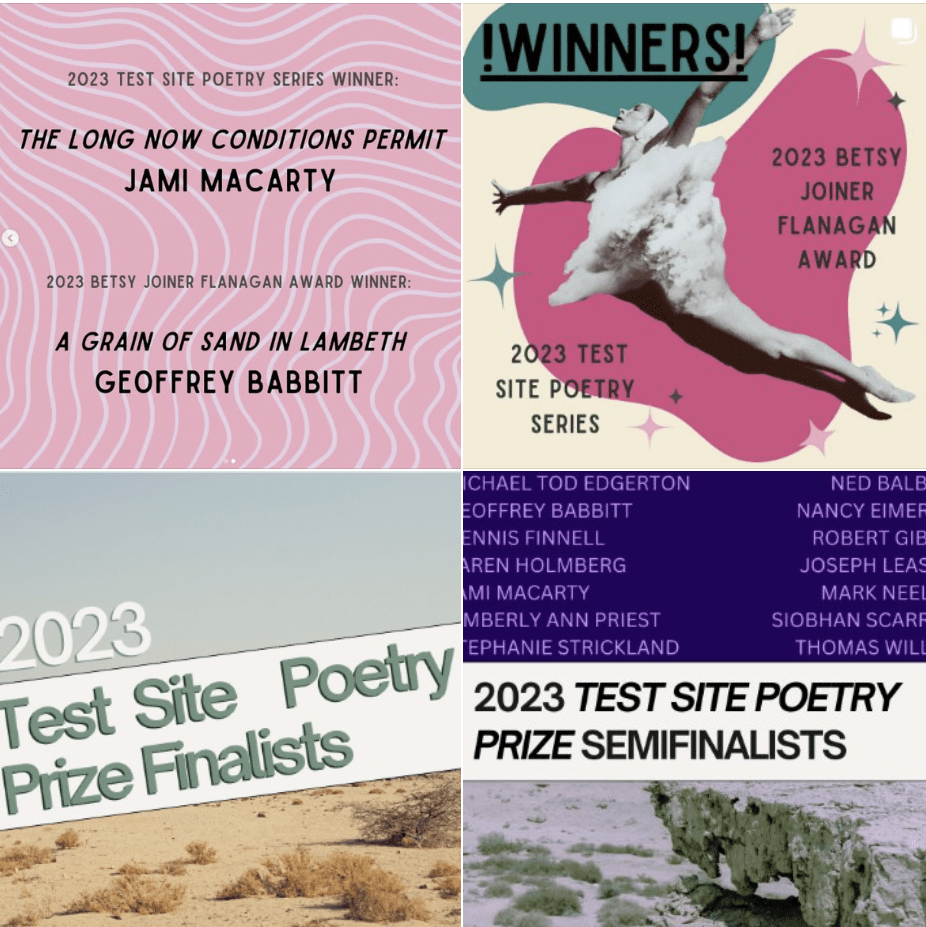
The 2023 Test Site Poetry Prize Semifinalists, Finalists, and Winners!

The Test Site Poetry Series is the collaborative book-publishing project of Interim: A Journal of Poetry and Poetics and the University of Nevada Press. Interim, established in 1944 by the late Wilber Stevens, is housed in the English Department at the University of Nevada, Las Vegas and is one of the longest-running “little” literary magazines in the United States. Interim editors and poets Claudia Keelan and Andrew S. Nicholson serve as Test Site Poetry Series editors. The Test Site Poetry Prize-winning book is chosen by Claudia Keelan and an advisory board, which includes poets Sherwin Bitsui, Donald Revell, Sasha Steensen, and Ronaldo V. Wilson.

The editors and advisory board are looking for manuscripts that engage the perilous conditions of life in the 21st century, as they pertain to issues of social justice and the earth. The winning book will demonstrate an ethos that considers the human condition in inclusive love and sympathy, while offering the same in consideration of the earth. Because we believe the truth is always experimental, we’ll especially appreciate books with innovative approaches.

Now, some of the delicious words The Test Site Poetry Series editorial board members shared about The Long Now Conditions Permit!

from Sasha Steensen (on Facebook):

from Ronaldo V. Wilson (the book’s endorsement):

from Claudia Keelan (the book’s endorsement):

from Donald Revell (the book’s endorsement):

These poets’ words for The Long Now Conditions Permit, heart-expanding gifts!

Finding the Cover Photo

The first time I saw Masahiko Kuroki‘s photograph of the tree (above) was early December 2024, scrolling my Facebook feed. It was late at night after a long day’s driving in a highway-side hotel. I had been stressing over the just-right photo. The publisher didn’t care for my ideas, and I wasn’t wild about theirs. Such is the often fraught book cover conversation!

It’s a mystery as to why Masahiko Kuroki’s photo appeared in my feed. I wasn’t following him. I had never heard of him. Nor had I previously seen any of his photos. Yet somehow rather miraculously his photo appeared. When I saw it, I slid off the edge of the bed. Then recovering myself from the floor, I shined the image toward my partner’s face and asked, What about this for the cover? As if falling off the bed wasn’t enough!

When I shared Mashiko Kuroki’s photograph with the University of Nevada Press team, they said: “But we’re really loving the final image… It’s the most unique of all the images you’ve suggested, or that we’ve found, and I love that the tree can be interpreted literally as a tree, or with just a bit of imagination, as a woman with her arms outstretched.”

As we moved through the design process, their admiration for Kuroki’s photograph grew: “Again, our team just loves this image! It’s so evocative and interesting. I think it’s really going to pull readers in.”

And, as we arrived at the cover’s final design: “For what we’ve started calling the “tree woman” image here in the office, I still think this is the best option, by far. If you want something unique that you’re not going to find on another book cover, this is the image to choose. We were talking about it in our staff meeting this morning, and everyone agrees this is one of the most striking covers we’ve proposed in quite a long time.”

I experience Masahiko Kuroki’s photo viscerally every time I behold it. I feel an upward reaching within me. Masahiko Kuroki’s photo is perfect company for the poems in The Long Now Conditions Permit which feature the figures of trees and women and seek a freedom from the threat of violence that all too often pervades natural and domestic environments.

Thank you to, Masahiko Kuroki, for agreeing to accompanying my poems with his photograph!

Writing the Poems in The Long Now Conditions Permit

I freshly wrote or deeply revised all of the poems in The Long Now Conditions Permit over ninety-five days between January 2020 and January 2021. The poems were drafted/revised among a shifting cohort of other poets during five days in person at a goddess table in January 2020 as the COVID-19 pandemic was just coming to our attention. Then, over three thirty-day online poem-a-day writing sprees in July 2020, October 2020, and January 2021. I loved the practice of trying to write a poem-a-day. The intensity! There were duds, but there were keepers. The process gave me an experience of seeing just what writing I could accomplish in a relatively short period of time. It showed me the momentum of daily practice and power of cumulative effect in writing. The practice offered me a community of writers. And I made some poetry pals!

Generous Publishers of Individual Poems

What makes a full-length collection? Individual poems! They are the building blocks and act as gateways from poem to poem, and engender conversations between poet and editor, poet and publisher. Individual poems have their own lives and are part of the lives of full-length collections. Individual poems are the beginning of a book, and they point to a book when it comes into being.

While searching for my book’s publisher, I tweaked the poems and tried out the revised versions by sending them out for consideration with literary magazines in Canada and the US. This editorial process offered me valuable information about which poems would make up the manuscript of The Long Now Conditions Permit. Sometimes the poems editors believed in were also the poems I believed in. Sometimes not. So, I had to figure out which poems mattered most to the life of the book.

Thirteen editors of literary magazines selected individual poems from The Long Now Conditions Permit for publication in their the literary magazines they helm. I wish to acknowledge the hardworking and devoted editors, staff, publishers, and printers for giving time, attention, and space to my writing. Thank you, Geoffrey Gatza at BlazeVOX; Matthew Cooperman at Colorado Review; Haley Lasché at Concision Poetry Journal; Claudia Keelan at Interim: A Journal of Poetry & Poetics; Simone Muench at The Jet Fuel Review; Robert Julius and Alyssa Froehling at The Journal; Charles Kell at Ocean State Review; Richard Greenfield at Puerto del Sol; Jackie Janusis at Redivider; Jaimie Gusman at Tinfish; Eleni Zisimatos at Vallum Magazine and Vallum Chapbook Series; Gillian Conoley at Volt; Sue Goyette, editor of the anthology Resistance: Righteous Rage in the Age of #Metoo (University of Regina Press, 2020). Special thanks to Interim: A Journal of Poetry and Poetics, Vallum Magazine, and Vallum Chapbook Series for their ongoing support of my writing by publishing my poems in several issues between 2020 and 2024.

I take the time and space above to name these editors and publications as a gesture of gratitude because they took the time with and offered space to my writing. They are important to my writing life. And they are part of the valuable conversation I want to have about my poems and poetry in general.

Seeking a Publisher

In December 2021, I offered for consideration to The Test Site Poetry Series the first version of the manuscript. It was one hundred and twenty pages long! That’s long by most standards. Typically, the recommended length for manuscripts is around seventy pages. The manuscript’s title was, and has always been, The Long Now Conditions Permit. It was named a finalist for The Test Site Poetry Series. Spur! The next year and the one after that, the manuscript was on the shortlist with Canada’s Brick Books. Spur! Spur! Then, in March 2024 it won the 2023 Test Site Poetry Series Prize! In all, I offered the manuscript for consideration forty-one times.

For me, the story of how The Long Now Conditions Permit came into being sums to two words: Persistence! Perseverance!

Now, Seeking Readers

Now, for my book I seek readers! Gentle, generous readers who will give The Long Now Conditions Permit the gift of their attention. I would love to count you as one of my poetry collection’s readers! Will you be one of The Long Now Conditions Permit‘s readers?

: : : :
Thank You Bows!

+ Thank you bows (continuous!) to you, dear reader, for the gift of your attention! Welcome, welcome to those of you new to these dispatches on reading and writing books. May you find inspiration for your writer’s life here!

+ Thank you bows (continuous!) to my precious community. To everyone who support my writing, especially women/women-identified writers for not coveting or competing, but sharing and supporting.

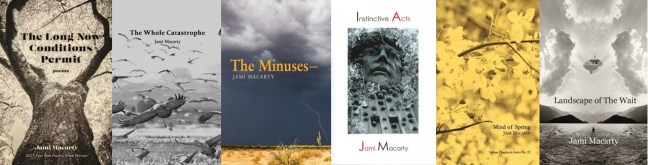
+ Thank you bows for supporting The Long Now Conditions Permit (2025): +Bows (continuous!) to my publisher the University of Nevada Press and staff for making my book The Long Now Conditions Permit with me. +Bows (continuous!) to Claudia Keelan and Andrew Nicholson, series editors, and the series board Sherwin Bitsui, Donald Revell, Sasha Steensen, and Ronaldo Wilson of Interim’s Test Site Poetry Series, who selected The Long Now Conditions Permit (University of Nevada Press, December 2025) as the 2023 winner of the Test Site Series Prize. +Bows (continuous!) to Claudia Keelan, Donal Revell, and Ronaldo V. Wilson for offering your word-endorsements! +Bows to Mashiko Kuroki for his luminous tree-woman photo for the cover! +Bows (continuous) to the editors of literary magazines who supported the publication of individual poems from The Long Now Conditions Permit: Geoffrey Gatza at BlazeVOX; Matthew Cooperman at Colorado Review; Haley Lasché at Concision Poetry Journal; Claudia Keelan at Interim: A Journal of Poetry & Poetics; Simone Muench at The Jet Fuel Review; Robert Julius and Alyssa Froehling at The Journal; Charles Kell at Ocean State Review; Richard Greenfield at Puerto del Sol; Jackie Janusis at Redivider; Jaimie Gusman at Tinfish; Eleni Zisimatos at Vallum Magazine and Vallum Chapbook Series; Gillian Conoley at Volt; Sue Goyette, editor of the anthology Resistance: Righteous Rage in the Age of #Metoo (University of Regina Press, 2020).

! BOOKS !

Dear Readers, Dear Readers,

Here I am at May’s end to share with you two poems from my second collection, The Long Now Conditions Permit (awaiting a beloved publisher), that have been recently published, and to talk a bit about my practice of sending my writing out for consideration.

Jet Fuel Review #23; Cover Art: Terrarium with Heart of Amateur Mycologist, by Karyna McGlynn

Jet Fuel Review first came to my attention within a community of women/women-identified writers who share their publishing yeses and nos. Yes, also the nos. Because receiving a no is an indication of taking the time and making the effort to research magazines, prepare a batch of writing, and send it off for consideration. That is, a no is not feedback on its own, but it is a sign that the writer is committed enough to her writing to share it with editors, publishers, and readers. So, our community celebrates the nos. In fact, we challenge each other to send our writing out into the world enough in order to reach the yearly goal of receiving one hundred nos. This is a intersectional feminist literary action meant to confront especially the gender imbalances in the literary landscape.

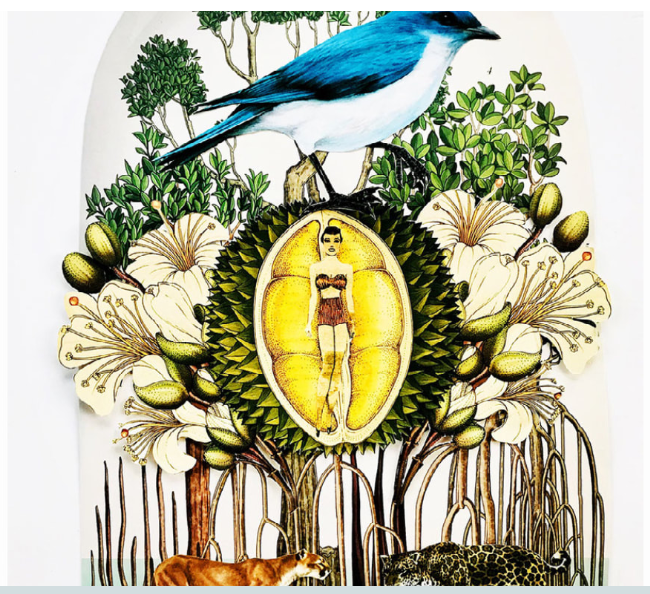
Terrarium with Eve and Split Durian, by Karyna McGlynn

A few of the women writers in this community shared that they had received a yes or a no from Jet Fuel Review. After the name of the magazine appeared in the field of my attention a few times, I felt called to take a closer look. What first captured my attention when I visited the Jet Fuel Review website: the artwork! I found it to be a beautiful blend of the provocative and evocative, speaking a visual language resonant with my imagination and writing. Then, upon reading the writing, I found much to react for and against—both ranges of responsiveness are important to me as a reader. Respecting what I saw and read, I sent the editors a batch of my poems.

They said yes to “Splitting Lesson,” a poem from The Long Now Conditions Permit. Whoo hoo!

l am grateful to everyone who makes Jet Fuel Review (JTR) a vibrancy; I appreciate being included in the JTR community. How dear and special to be in conversation with careful and thoughtful editors.

Sweetening the pot of this yes: That sister writers from my community brought Jet Fuel Review to my attention; That my poem shares space in the magazine with writing by some of those sister writers; That my poem rubs shoulders with poems by poets new to me, including poet and artist Karyna McGlynn whose art is featured in the issue. I dig her marvelous collages!

Queen of Melting Ice, by Karyna McGlynn

In our writing community, we not only share yeses/nos, we share our experiences with magazines, bringing to the fore: Those new or lesser known; Those receptive to particular styles of writing; Those with/out artist-friendly editorial practices; Those magazines to approach with trust or caution; Those to avoid. This sharing—rather than coveting—of experience, knowledge, information, and resources is the precious stuff of a supportive community that expresses not scarcity, but abundance. This ethos strengthens our community and broadens it, bringing more writers together with writers and readers. Simply grand!

Of course, the practice of sending writing out for consideration is also, in part, a numbers game. One cannot win unless one plays. As the wisdom goes. And, the way laws of averages work, the more writing a writer sends out for consideration, the more chances there are for it to receive a yes. I am engaged in this practice of sending my writing out for consideration, because I want to learn what there is to learn from the process. But I know this is not a practice for every writer. For me, it is a question of do I want to keep my writing to myself or share it? I want to share it! And, in the process, I am building my tolerance for no. I have come to understand that much about being a writer is about building tolerances for various aspects of the writing practice that are beyond my control. And, I imagine eventually being unshaken by nos… 

And, in the same way, being unshaken by yeses, though shaking with despair at the nos and delight at the yeses may not be helped.

One flavor of yes that emerges from the practice of sending writing out for consideration is the opportunity to build a positive relationship of mutual respect, trust, and meaning with the editorial team of a literary magazine in which my writing appears. Those qualities are surely, brilliantly alive in my relationship with the editorial team at Vallum: Contemporary Poetry.

Vallum: Contemporary Poetry 13:1 “Open Theme”; Art: Matt Crump

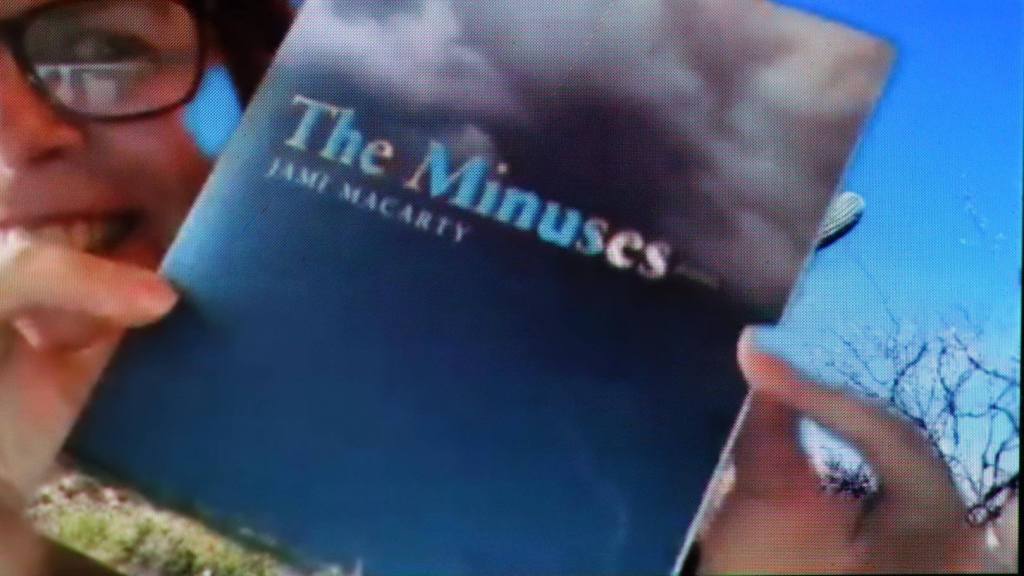
The lovely, good people at Vallum have been enormously supportive to me and my poems. “Helicopter” and “Nor’easter,” two poems from The Minuses (Center for Literary Publishing, 2020), appeared in issue 13:1 “Open Theme.”

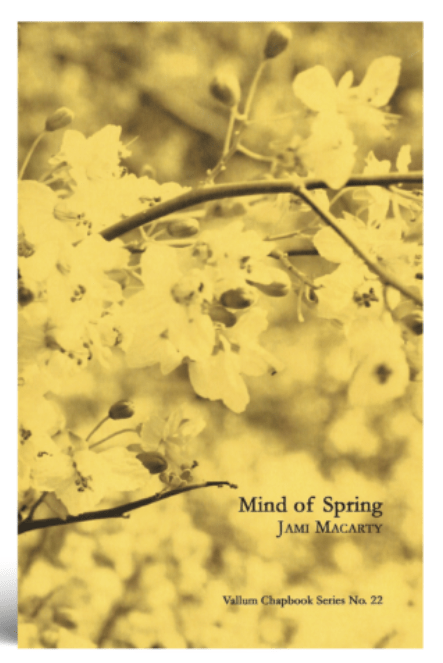
Cover of Mind of Spring; Cover: James Bremner, Jr.

Mind of Spring,” my long, three-part poem won the 2017 Vallum Chapbook Award and was subsequently published with a cheery yellow (the color of palo verde blossoms) cover, in a limited edition chapbook (sold out in print, but available digitally).

Vallum: Contemporary Poetry 18:1 “Invisibility”; Cover: Antoine Janot

Also, my Vallum darlings have published two poems from The Long Now Conditions Permit. “Lustrous Fugitive” appears in issue 18:1 “Invisibility.”

Vallum: Contemporary Poetry 19:1 “Bridges”; Cover: Nora Kelly

I like and admire and respect the editors at Vallum very much, and I like the art and writing that the magazine publishes. Not all of it of course, but most of it and that’s something, because I can be a picky and picayune reader. We each have our preferred chords and flavors and such. “Is Occurring,” another poem from The Long Now Conditions Permit, seems to have struck a chord with the editors of Vallum 19:1 “Bridges,” where it appears. Whoo hoo!

Hurrah bridges!

Poetry Bridges!

Community bridges!

: :

The Pluses!

+ Thank you bows (continuous!) to you, dear reader, for the gift of your attention!

+ Thank you bows to my community of women/women-identified writers for their beautiful, generous, loving support, inspiration, and encouragement.

+ Thank you bows to Simone Muench, Faculty Advisor, Cassidy Fontaine-Warunek, Managing Editor et al who make Jet Fuel Review a vibrancy; I appreciate their professional and stream-lined editorial production methods, and now that I am taking in issue #23, I am appreciative of their collective, inclusive, expansive editorial vision and artistic direction. 

+ Thank you bows to Eleni Zisimatos, Co-Editor-in-Chief & Poetry Editor, Jay Ritchie, Managing Editor et al at Vallum: Contemporary Poetry for including me and my poems in your sustaining, important, and beautiful presence of and for poetry and art in Montreal, Canada, and internationally.

+ Thank you bows (continuous!) to my publisher Stephanie G’Schwind, and Mountain West Poetry Series editors Donald Revell and Kazim Ali, et al interns at the Center for Literary Publishing (CLP) for making The Minuses (2020) with me.

+ Thank you bows (continuous!) to Beth Svinarich et al at University Press of Colorado for their beautiful support to me and The Minuses.

+ Thank you bows (continuous!) to monsoon storm chaser and marvelous professional photographer, Liz Kemp whose monsoon photograph storms the cover of The Minuses.

+ Thank you bows to Nomados Literary Publishers, Meredith and Peter Quartermain for making my chapbook Instinctive Acts with me.

+ Thank you bows to Vallum Chapbook Series and editors Leigh Kotsilidis and Eleni Zisimatos for making my chapbook Mind of Spring with me.

+ Thank you bows to Finishing Line Press and editors Leah Maines and Christen Kinkaid for making my chapbook Landscape of The Wait with me.

+ Thank you bows (continuous!) to Vincent K. Wong for his friendship, creative collaboration, and for taking my author photos.

+ This bears repeating: Thank you bows (continuous!) to you, dear reader, for the gift of your attention! If you have any questions or comments, write me! I would love to hear from you!

++ The Minuses ++

Continuing, dear reader, with the pluses congregating around The Minuses.

Two such pluses are a conversation and a reading that took place in July, but are reverberating their good, abundant energy of spontaneous community to me even now.

The banner for Let’s Talk Books w/some partial faces.

First, I bring to your attention the plus of the July 15, 2020 Let’s Talk Books conversation I joined with authors Christine Chiu, Melanie Conroy-Goldman, Naomi Danis, and Thaddeus Rutkowski.

Divine host Christine Chui brought four complete strangers, writing in different genres together to talk about the theme of Friendship & Connection in our writing. Each of us talked about our new-to-the-world books. For Melanie, that was her novel The Likely World (Red Hen Press, 2020); for Naomi that was her picture book My Best Friend, Sometimes (Pow! Kids Books, 2020); for Thaddeus that was his poetry collection Tricks of Light (Great Weather for Media, 2020); for me, of course, that was my poetry collection The Minuses (Center for Literary Publishing, 2020).

In anticipation of the conversation, I felt some shyness and hesitation. I had the feeling that our meeting would be a bit awkward like how it feels to be at a cocktail party at which I know no one. You know, it can be a thing to sit down with a stranger and strike up a conversation about something that matters as much as a book does to its author.

My hesitation was near to instantly allayed. Christine was a warm host; the other authors were open to conversation. I must say it was remarkably easy to talk with these delightful writers about their work and to share mine. We discovered many a confluence between our works.

Watch & listen to the

Let’s Talk Books

conversation here!

: : : :

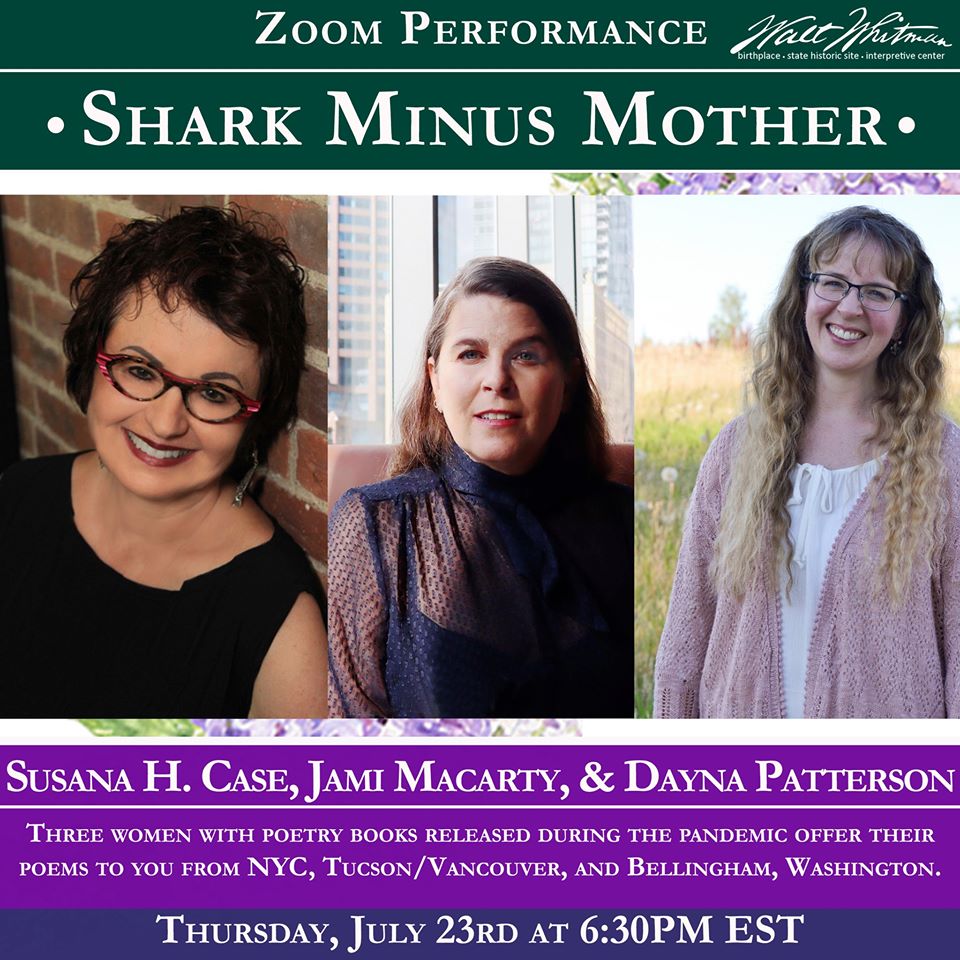
Walt Whitman Birthplace reading event poster.

Second, I bring forward for your listening and viewing pleasure, the plus of the July 23, 2020 Walt Whitman Birthplace Association poetry reading I offered with poets Susana Case and Dayna Patterson. Susana read from her collection Dead Shark on the N Train (Broadstone Books, 2020); Dayna read from If Mother Braids a Waterfall (Signature Books, 2020); I read from The Minuses (Center for Literary Publishing, 2020).

Though in 2019 I had published a poem of Susana’s in The Maynard, we didn’t know each other. Again for this event, we were three women poet strangers, sharing the intimacy of our work with one another.

This reading came to be rather magically. Here’s how. I was reading a Facebook feed belonging to a women’s writers group when I happened upon a post bemoaning publishing a book in the time of Covid-19. There are many of us for whom this is a tough reality! Such a time doubles the already hard work of bringing a book to the attention of variously distracted and gravely preoccupied readers.

By the time I arrived at the Facebook post, Susana had commented that she was in the same boat; then Dayna had added her voice. I was third to join the chorus on their boat, asking: “What should we make together?” Susana answered: “A reading,” and away we three went.

Powerhouse Susana took the lead of locating a host and venue. In fact, it was also Susana who connected me with Christine Chiu’s “Let’s Talk Books.” I came up with the event title–a sort of neologism of our three book titles–wrote the event copy, and made a poster of our three books. We all worked tirelessly to promote the event.

I may have had the easiest time in promoting the event and bringing people to virtual seats at it–because the event fell on my birthday. Many blessed souls showed up for me, which made it feel like a party! It was a truly wonderful way to spend my birthday.

Watch & listen to the

Shark Minus Mother

reading here!

These two events enact for me the generosity of strangers, the special magic of collaboration, and the creative powers of community. You see, dear reader, that’s why the energy and spirit of these events are still alive for me. Friendship and connection abound!

: : : :

+ Thank you bows to Christine Chui for hosting me at Let’s Talk Books, and to authors Naomi Danis, Melanie Conroy-Goldman, and Thaddeus Rutkowski for sharing themselves, their books, and conversation with me.

+ Thank you bows to the Walt Whitman Birthplace Association for hosting the July 23 reading; to the lovely Caitlyn Shea, who emceed the event; to sister Goddess poets Susana Case and Dayna Patterson for making a reading with me.

+ Thank you bows to the many souls with their beautiful ears and minds who joined me et al for the July 15 (some 100!) conversation and for the July 23 (some 70!) reading.

+ Thank you bows (continuous!) to publisher Stephanie G’Schwind, and Mountain West Poetry Series editors Donald Revell and Kazim Ali, et al interns at the Center for Literary Publishing (CLP) for making The Minuses with me.

+ Thank you bows to you, dear reader, for the gift of your attention! If you have any questions or comments, write me!

++ THE MINUSES ++

Continuing, dear reader, with the pluses congregating around The Minuses. You may be wondering what are “the minuses” and how do the poems of the book address and express them… To satisfy your wondering, here’s an encapsulation of what the poems take on and talk up:

The Minuses beckons attention to ecological and feminist issues and the co-incidence of eating disorders, sexual harassment, family and intimate partner violence, homelessness, suicide, environmental destruction, and other forms of endangerment. Seeking escape from relationship, belief and self, multi-perspective survivors claim voice as contemplators of natural splendors, and as seekers of incarnate desires. These voices amplify the precariousness that predicates women’s lives and the natural world, laying bare the struggle and faith required to endure with integrity and spirit intact.

from the back cover of The Minuses

The duality between “the minuses” and “the pluses” is an aspect of the physical word being lived and survived within the poems of The Minuses.

That there are pluses occurring around the poems of The Minuses and in a continuum of readers and their responses given to the poems. Well, that’s everything to a poet. By which I mean: an expansiveness, transcending the physical world and belonging to the spiritual world.

: : : :

One such person giving his spirit and attention to The Minuses is Paul Nelson, founder of Seattle Poetics LAB (SPLAB), the Cascadia Poetry Festival, and POetry POstcard Fest (PoPo). As well as a spiritual practitioner and a maker of community-based projects, Paul is the author of Organic Poetry: North American Field Poetics, a collection of essays, and A Time Before Slaughter, a serial poem, re-enacting the history of Auburn, WA, among others. I hope you will give some of your special attention to Paul’s creative and community work.

Here, I give you an excerpt of Paul’s “Some Notes on The Minuses,” which he posted on his site on July 10, 2020. Click on Paul’s blog title or the date to read his notes in full; it’s worth the click (!) because of the context he offers on Postmodern poetics and Charles Olson’s “dodge of discourse.” Here’s the excerpt of Paul’s “Notes”:

Notes on The Minuses: Paul Nelson

To celebrate that 5% of North American poetry (a number I simply pulled out of some wet, warm place) one must savor the books that go beyond the dodges of discourse. One which came across my desk a couple of months ago is The Minuses by Jami Macarty…

As I was reading The Minuses I took some notes as if I were going to interview her. So, this is not a “review” which is not my forte, but some notes on The Minuses.

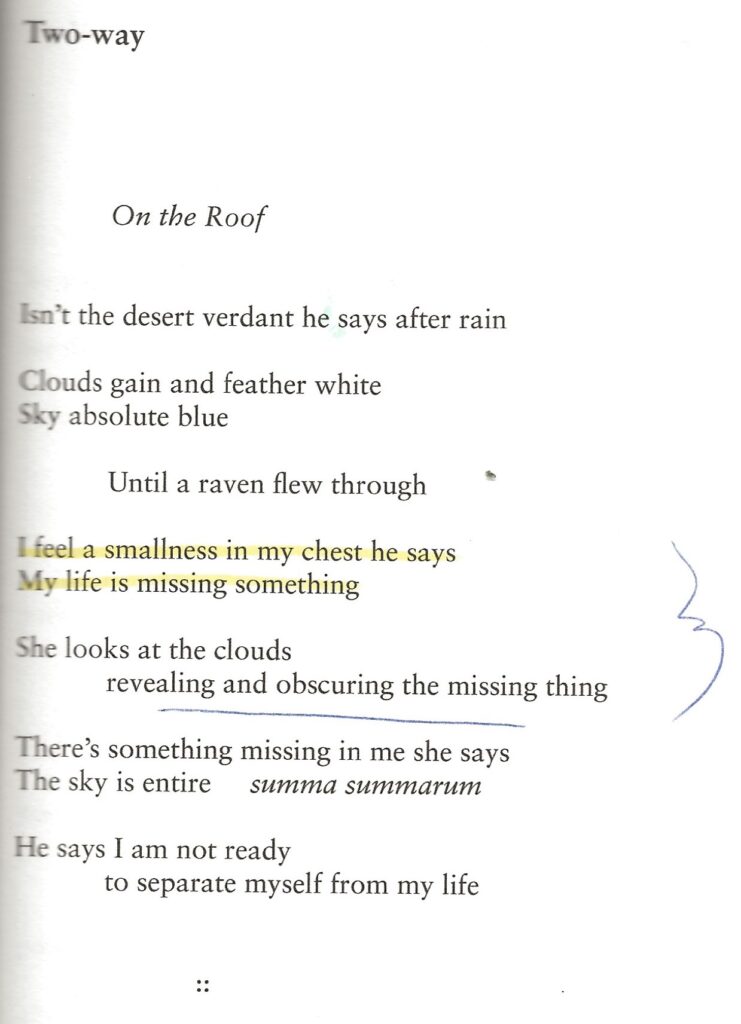
First note is from the poem Two-way:

Part (page 9) of the poem, “Two-way,” from The Minuses; image by Paul Nelson.

In many North American indigenous cultures Raven is associated with death, or transformation. A trickster like coyote in some traditions. In J.C. Cooper’s book An Illustrated Encyclopaedia of Traditional Symbols (a go-to book for me) Raven represents prophecy, is a symbol of “blackening and mortification” in alchemy and also “The raven sent out from the Ark by Noah represents wandering, unrest and the unclean.” Here’s where we remember the allusion to violence in the back blurb and recognize the divinity the author sees missing from the situation. I love how she ends the poem, referring to a helicopter taking off, leaving “the earth-abandoned swirl.”

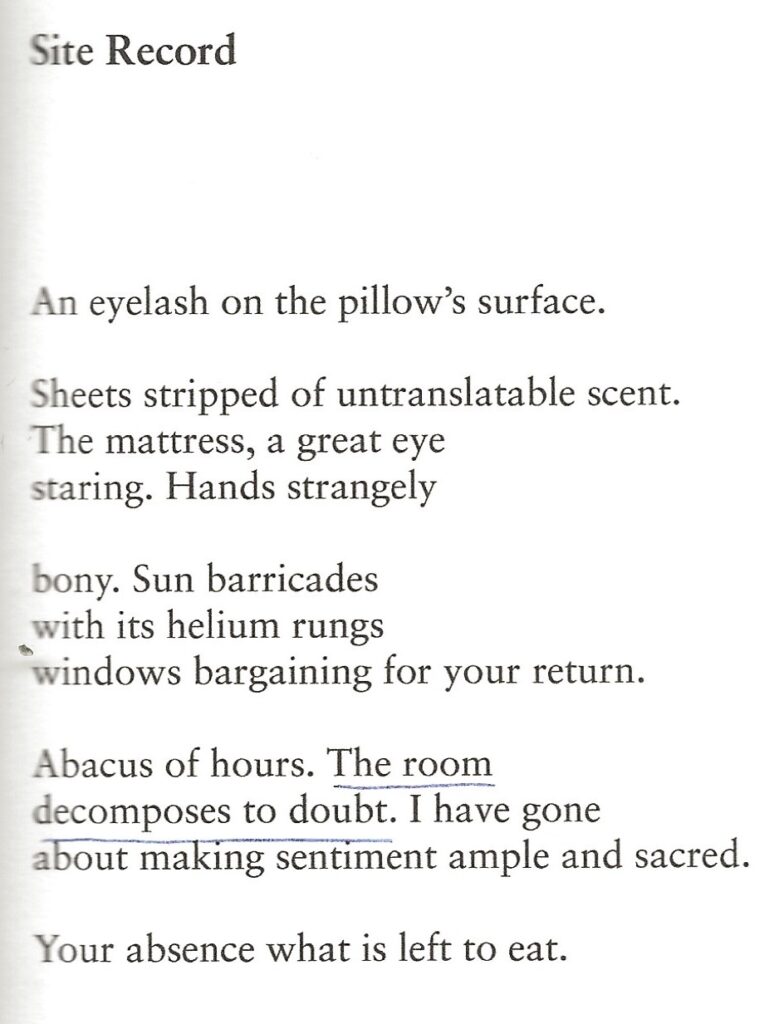
There is the poem Site Record:

The poem, “Site Record” (page 19) from The Minuses; image by Paul Nelson.

Take THAT you SOB!

And one could go on like this, pointing out the very sharp perceptions, the moments where one feels aligned with the poet, perhaps re-experiencing the worst moments of relationship (though as a straight man, I am much less likely to experience physical abuse or violence in a relationship) … In the notes at the end of the book, which are helpful and not “here’s what this poem means” which is what you might find in a book of naïve or “workshop” poetry, she writes that the poem is “indebted to Leslie Scalapino and Rosemarie Waldrop.” Here are two poets that are both well known in “outsider” North American poetry circles and gives you some sense of the poetry ancestors she has allied herself with...

: : : :

I feel very lucky to have Paul’s “Notes”; these are the sort of thoughts-in-action, reader’s response most precious to a poet. You are most cordially invited to go directly to Paul Nelson’s site and read the entirety of “Some Notes on The Minuses.”

: : : :

Also on July 10, as luck would have it, Talking Poetics #22: How Poems Begin, a piece I offered to ottawa poetry newsletter, curated by rob mclennan, was published.

How does a poet begin a poem? Does the poet begin a poem or does the poem begin itself? These questions are the basis of my inquiry on how “my” poems begin and from where, from what energy and impulse. Read what I wrote on the matter of beginnings:

Talking Poetics #22 : Jami Macarty

How poems begin

Nuts and bolts. Which comes first? The answer interests me. Sometimes bolts; almost always nuts! At other times, especially when writing is happening in real time, the question is forgotten…. When a poem is beginning or middling or ending then there’s no need for the question. Questions about how a poem begins seem especially instrumental as points of departure when no poem is forthcoming or beginning. If I can know how a poem begins, then maybe I can begin one. A poem, it seems to me, is always beginning.

From another angle, who knows how a poem gets started? When confronted with this question, I don’t. In so many ways and a lot of the time, the beginning arises out of mystery. Some immaculateness.

If a poem’s a living thing like a plant, then its beginning is a seed. Or, the beginning is a bird that eats and passes the seed on, somewhat fortified, to a locale where conditions are more favorable and growth more likely.

This process may suggest silence, but monitor for heartrate and you’ll hear one. Ah ha! That seems to be the way a poem gets started for me—auditorily. Via a seed sound, word, or phrase. I hear something whispered, overhear speech or a birdsong or a gate creak—flints that spark my mind or serve like a hand shot straight up inquiry.

As I think about these spokens and overheards some qualities emerge. They are typically the most obvious things said: Something is not right here. Often declarative. Ambiguous. A double entendre. Often paratactic: I’ll be mercy if you be a killer whale. Sometimes mishearings: Age of Aquariums. Alliterations. Assonances. Aphorisms given new life. Chiasmic reversals and antimetabolic turn abouts—Let me go, so I can come back, my mother said.  Repetitive echophenonomena like the Gila woodpecker beak-banging the corrugated roof. Syllogistic.

So, there’s a sound, a phrase, a statement, an utterance of varying qualities whose wind thrums my mind. I use a notebook. The words get written down. Often there is more listening and recording on the page. Collages of meaning and tone. If not then, later.

A parallel visual process may also unfold. Instead of hearing the phrase, it’s read or misread. It gets written down. That may lead to an on-the-spot erasure or mining of language, words, word pairings. More phrases written down.

Mood may dictate. Mood of listener, reader. Mood of what’s heard and read. Or, is that intuition talking. Both filter and factor the selection process while ‘I’ stays in the background. One part of the brain is occupied with listening or looking, the other finding. If the spell breaks and self-consciousness or willfulness interrupts this program, then it’s over for that sitting.

There isn’t necessarily sitting to make this happen or even with the intention for it to happen. There’s only openness to happening, then noticing when it does. A going with that.

It has always been like this. Since I was a kid, writing things down as if transcribing the sounded world. Writing things down because of how they sound. The pleasure of sounds coming together in meaning, in a way that interests. Of course, this implies that there’s an awareness of interest. An awakening alertness to sound, to how something sounds.

When considering starting a poem with a “loose structure” it takes a while for an example to arise. It happens, but not often. When it has, the structure is anaphoric: I’ll be… if you be…; I’ll be… if you be… “Ideas” tend not to be my flints either. If ideas, then they tend to reference subject matter. Maybe I’ll write about bees… Honestly, though, I can’t make anything happen in the beginning or ever. If I try or force bees, I get stung. Writing and beginning to write work in flow and flight and if I get out of the way of words. Plenty of sparks from words themselves. Their sounds unbound and bounding.

At the beginning, in it, there’s not the presence of knowing whether it’s the middle, beginning, or end. Order is a thing later discovered. The beginning is often the end, and then writing that proceeds is often writing to a beginning. Knowing where, when, what next, that can be a thing in the revision process. Often what feels satisfying is only so to no one else.

Reading. Reading takes place to sprout language, tone. To get in word mood. To warm up eyes and ears. To see if the conditions for writing arise. It’s the ears again; they have to hear something. When they do, the language boat is underway. Could be a short writing-reading spell or a day or night.

Bits, pieces, get assembled. Reorder can be a thing. What comes out is often disrupted on the way, so attention is given over to discovering what’s backward, diagonal, and sideways. From there line breaks.

At first, when typing from notebooks, assembling fragments onto a screen page, line breaks and lengths are left as is. In subsequent drafts and the more the assemblage is heard, the more apt the breaks and length are to be changed.

There’s a favoring of line as unit of meaning. One that adds to or contradicts the conveyance of the whole. Lines tend to accumulate via caesura and hemistich. All line lengths are to be loved equally. For breath rhythm and visual intrigue, a poem may mix line lengths. Love sentence as much as line, but sentences save themselves for prose poems. Delineated poems tend not to be made up of sentences. When they are the sentence is disrupted, disguised, an intervenor and sometime conscious objector.

Some of this is true. Some contradictory. Unkempt. Am I always excavating language? Not always. I think of relative. I think of instinct. I know that place. You know that place. You’ve been there. We recognize the artifacts.

I like beginnings, but can’t pretend I understand or know them. I think there may be a simple answer to the question how my poems begin—they just begin—but I only just thought of that—at the ending.

: : : :

I hope you will check out rob mclennan and his various projects supporting poetry in North America, including his ottawa poetry newsletter and Talking Poetics series. There, you will find, a cornucopia of inspiration! You may also read my contribution to Talking Poetics #22: How Poems Begin, in situ there.

: : : :

+ Thank you bows to Paul Nelson for reading The Minuses, offering his beautifully personal, contextualizing reading “Notes” on the poems, and for featuring The Minuses on his Cascadia interviews blog.

+ Thank you bows to rob mclennan for including me in the Talking Poetics series in ottawa poetry newsletter and for publishing my Talking Poetics #22: How Poems Begin.

+ Thank you bows (continuous!) to publisher Stephanie G’Schwind, editor Donald Revell, et al interns at the Center for Literary Publishing (CLP) for making The Minuses with me.

+ Thank you bows to you, dear reader, for the gift of your attention! If you have any questions about how poems begin or anything else poetry-related, write me!

++ THE MINUSES ++

Dear Reader, an interview is a chance to practice the high art of conversation. A conversation is a plus!

I bring to your attention the June 9, 2020 plus of an interview that the most lovely human and excellent poetry reader, Dayna Patterson conducted with me and The Minuses. Dayna and I met in our conversation on the Poetry Hour (4-5pm PDT) that she hosts for Western C.A.R.E.S. (Community, Activities, Resources, Education, Support) at Western Washington University.

Watch and listen to conversation here (use password: 8Q.A!M.?)

photos and compilation by Vincent K. Wong; background image by Jami Macarty

The Poetry Hour interview took place over Zoom, of course. The photos and compilation above are by Vincent K. Wong, my good pal and a terrific experimental photographer. Vincent attended the event, with 40 other souls, and took these photos of Dayna and me.

I didn’t realize the background image of Sonoran Desert and its saguaro cacti came through and interpentrated the live image of me, shifting foreground and background, the live and the still until Vincent sent me the series of photos he took during the event. I love the photos and the special effects are a perfect visual component to a quality of feeling I’m trying to get at in the poems of The Minuses.

photo by Vincent K. Wong; background image by Jami Macarty

Here are the questions Dayna Patterson asked me during the interview:

  1. We’re here to discuss your recent collection, The Minuses. When I think of the phrase, “the minuses,” I usually hear it in conjunction with “the pluses and the minuses.” With that title holding only the last part of the phrase, I expected that the book would press into themes of loss, negation, and deprivation. It certainly did that, and in ways that surprised me. For example, the book seems to be built from the scrap of a wrecked relationship. Is that an accurate description? Would you read the first piece for us and talk about why you selected this title for your book? 
  2. There’s a lot of verticality in this collection, a motif that in some places conjures, for me, a feeling of vertigo, and in other places a kind of longing to be detached, above the fray, so to speak. How were you working with notions of verticality vs. horizontality in this collection? (Read “Flight Hours,” “Mountain Hypotenuse,” and/or “Nor’easter”)
  3. How and when did you become so intimately acquainted with the landscape of the Sonoran Desert and its environs? What was your research process for the poems in this collection? (Read “Monsoon Desert,” “At Gravity’s Feet,” & “Music 5:30.”) I’m particularly interested in the phrase “I sent myself into the desert to become a third person” in “At Gravity’s Feet.”
  4. Can you talk about the way these poems lean into the colon and the double colon? For you, does the colon represent a kind of mathematical equation rendered into syntax? (Read “By Virtue of And”)
  5. A poem that really resonated for me from this collection is “Door Ratio.” Would you mind reading that one for us?
  6. Your notes section is expansive, specific, and generous. Why include the Latin name for each species you mention in the notes? How do you decide what to put in the notes to a collection?
  7. Is there anything else you’d like to share about the making of this book?
  8. What are you working on now or next?
  9. Who are some of the writers or artists that inspire you? In particular, are there contemporary poets you’d like to recommend to our audience today?

And, here I am endeavoring to arrive at answers, to be responsive.

photo by Vincent K. Wong; background image by Jami Macarty

Dayna’s and my conversation was followed by a Q&A with our audience of listeners and joining souls.

Watch and listen to conversation here (use password: 8Q.A!M.?)

: : : :

+ Thank you bows to Goddess Dayna Patterson for reading The Minuses, for her thoughtful questions, and for featuring and hosting me on the Poetry Hour for Western C.A.R.E.S. at Western Washington University.

+ Thank you bows to Western C.A.R.E.S. at Western Washington University and Goddess Athena Roth for offering her very fine administrative support during the event.

+ Thank you bows to the 40 souls with their beautiful ears and minds who joined me et al for the June 9 interview and conversation.

+ Thank you bows (continuous!) to publisher Stephanie G’Schwind, editor Donald Revell, et al interns at the Center for Literary Publishing (CLP) for making The Minuses with me.

+ Thank you bows to you, dear reader, for the gift of your attention!